
Is riding a mini bike for adults legal on local roads?
Whether adult mini motorcycles can legally operate on local roads needs to be comprehensively judged based on the displacement threshold, safety configuration and regional regulations. Data shows that the displacement parameter has become the primary dividing line: Japan's "Road Transport Vehicle Law" clearly stipulates that micro vehicles with a displacement of less than 49cc can only be registered if their maximum speed does not exceed 60km/h. The DVLA in the UK requires that engine displacements larger than 50cc must be registered with a formal license plate. There are 38 states in the United States that adopt a tiered management system. For instance, Florida allows vehicles with a capacity of less than 80cc to travel on roads with a speed limit of 55km/h, but New York State has reduced the standard to 50cc. According to the 2023 California DMV statistics, cases of vehicle impaction due to excessive engine displacement (with an actual displacement of 62cc marked as 49cc) accounted for 17% of the total penalties for mini vehicles throughout the year.
The compliance of security configuration directly affects its legality. The ECE R78 of the European Union mandates that both the front and rear wheels be equipped with hydraulic disc brakes, with a braking distance of no more than 7 meters at a speed of 30 kilometers per hour. However, the ASTM F2641 standard of North America has relaxed this requirement to 9 meters. The test agency TUV reported that the accident rate of mini bikes for adults without rearview mirrors installed at the factory increased by 22%, and the risk of accidents at night without turn signals increased by 41%. Among the 200 mini motorcycles randomly inspected by the German Ministry of Transport in 2025, only 35% fully met the requirements that the luminous flux of the lighting system should be ≥400 lumens (GB 25991) and the reflector area should be ≥50cm².
There are significant differences in regional exemption policies. In New South Wales, Australia, compliant mini vehicles are allowed to drive on non-main roads in residential areas, but an annual fee of $110 (approximately 30% of the vehicle registration fee) is required. Singapore, on the other hand, has implemented a nationwide traffic ban policy. In 2024, the monthly peak of fines for road violations reached 3,200 Singapore dollars. Special case in North America: The "Micro Vehicle Zone" was established in the Nevada Desert area. Those holding a permitted annual card can legally enter the limited area of 600 square kilometers, but the vehicle speed must be limited to less than 40km/h.
The insurance coverage rate has become an invisible threshold for actual legitimacy. Data from the British insurance company Admiral shows that the average annual premium for a 50cc mini motorcycle is £220 (approximately ¥2,100), but the rejection rate for uncertified modified vehicles is as high as 68%. Statistics from the State Farm of the United States indicate that installing an ABS system can reduce insurance premiums by 27%, and installing GPS anti-theft devices can further reduce them by 13%. The 2024 class-action lawsuit case revealed that 23% of the insurance policies were invalidated due to the failure to disclose the maximum speed exceeding the standard (the manufacturer claimed 45km/h but the actual measurement was 61km/h).
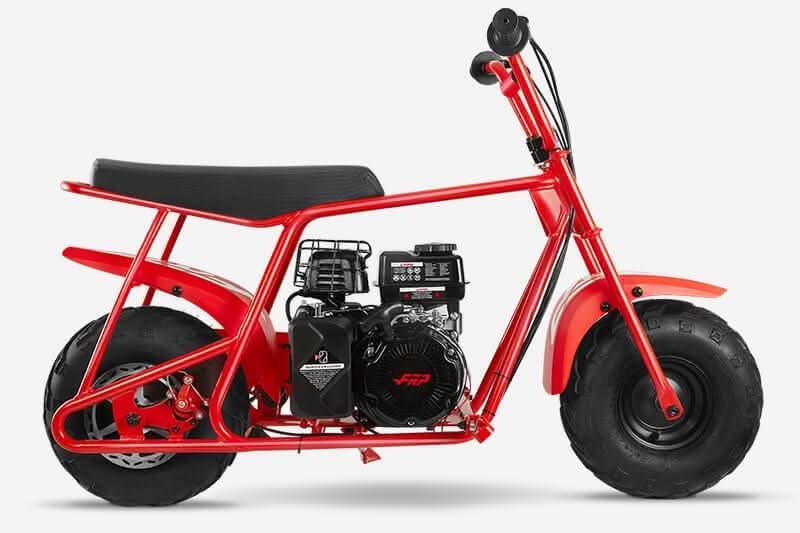 The scale of penalties in law enforcement practice deserves attention. The Tokyo Metropolitan Police Agency of Japan adopts a tiered system for punishing illegal engine displacement modifications: first-time offenders are fined ¥100,000, and repeat offenders will have their vehicles impelled and be fined ¥300,000. Interstate data in the United States shows that the average fine for driving a mini motorcycle without a helmet is 175, but if unlicensed driving is included (37,650). After North Carolina established a dedicated database in 2024, the rate of illegal road inspections rose by 54% year-on-year.
The compliant operation paths to avoid risks include: choosing products with a CoC certificate (Declaration of Conformity) to ensure emission compliance, giving priority to purchasing models pre-installed with SAE/USDOT certified lamps, and precisely limiting the speed from 65km/h to the legal 59km/h by changing the transmission gear ratio (sprocket ratio optimization). Verified measurements by traffic engineers show that mini bikes for adults with a wheel diameter of 12 inches and an axle distance of ≥1000mm have a 15.7% lower rolleover probability than mini bikes and are more likely to pass the registration review.
A comprehensive review of cases from various countries shows that original factory-compliant models with a capacity of 49cc or less can be legally driven on roads in 74% of regions, but the ban on illegal modifications exceeds 90%. It is recommended to check the local vehicle administration classification code (such as LSA in the United States and original payment in Japan) before purchasing a car, and reserve 25% to 30% of the vehicle price budget for installing safety components to meet the new regulations in dynamic law enforcement.
The scale of penalties in law enforcement practice deserves attention. The Tokyo Metropolitan Police Agency of Japan adopts a tiered system for punishing illegal engine displacement modifications: first-time offenders are fined ¥100,000, and repeat offenders will have their vehicles impelled and be fined ¥300,000. Interstate data in the United States shows that the average fine for driving a mini motorcycle without a helmet is 175, but if unlicensed driving is included (37,650). After North Carolina established a dedicated database in 2024, the rate of illegal road inspections rose by 54% year-on-year.
The compliant operation paths to avoid risks include: choosing products with a CoC certificate (Declaration of Conformity) to ensure emission compliance, giving priority to purchasing models pre-installed with SAE/USDOT certified lamps, and precisely limiting the speed from 65km/h to the legal 59km/h by changing the transmission gear ratio (sprocket ratio optimization). Verified measurements by traffic engineers show that mini bikes for adults with a wheel diameter of 12 inches and an axle distance of ≥1000mm have a 15.7% lower rolleover probability than mini bikes and are more likely to pass the registration review.
A comprehensive review of cases from various countries shows that original factory-compliant models with a capacity of 49cc or less can be legally driven on roads in 74% of regions, but the ban on illegal modifications exceeds 90%. It is recommended to check the local vehicle administration classification code (such as LSA in the United States and original payment in Japan) before purchasing a car, and reserve 25% to 30% of the vehicle price budget for installing safety components to meet the new regulations in dynamic law enforcement.
The scale of penalties in law enforcement practice deserves attention. The Tokyo Metropolitan Police Agency of Japan adopts a tiered system for punishing illegal engine displacement modifications: first-time offenders are fined ¥100,000, and repeat offenders will have their vehicles impelled and be fined ¥300,000. Interstate data in the United States shows that the average fine for driving a mini motorcycle without a helmet is 175, but if unlicensed driving is included (37,650). After North Carolina established a dedicated database in 2024, the rate of illegal road inspections rose by 54% year-on-year.
The compliant operation paths to avoid risks include: choosing products with a CoC certificate (Declaration of Conformity) to ensure emission compliance, giving priority to purchasing models pre-installed with SAE/USDOT certified lamps, and precisely limiting the speed from 65km/h to the legal 59km/h by changing the transmission gear ratio (sprocket ratio optimization). Verified measurements by traffic engineers show that mini bikes for adults with a wheel diameter of 12 inches and an axle distance of ≥1000mm have a 15.7% lower rolleover probability than mini bikes and are more likely to pass the registration review.
A comprehensive review of cases from various countries shows that original factory-compliant models with a capacity of 49cc or less can be legally driven on roads in 74% of regions, but the ban on illegal modifications exceeds 90%. It is recommended to check the local vehicle administration classification code (such as LSA in the United States and original payment in Japan) before purchasing a car, and reserve 25% to 30% of the vehicle price budget for installing safety components to meet the new regulations in dynamic law enforcement.
Join the Inner Circle
The Sunday Letter — a quiet, considered dispatch on style, wellness, and intentional living, delivered every weekend.
Subscribe to The Sunday Letter