
Beyond the Atmosphere: Why Global Integration is the True North of Modern Space Economics
The recent celebrations for Space Day 2026 in Chengdu offer a compelling look at how the space industry has transitioned from a localized government expenditure into a high-utility international asset class. For a reader following these developments, the significance isn't just in the hardware—the rockets or the satellites—but in the massive diplomatic and economic "orbital" return on investment (ROI). With heavyweights like the International Astronautical Federation and delegations from Brazil and Pakistan in attendance, it is clear that China is positioning the Tiangong space station not just as a laboratory, but as a high-density platform for a multi-polar space economy. When we talk about an "alternative to the ISS," we are essentially discussing the market diversification of microgravity research, which is projected to lower the cost of pharmaceutical and materials science experiments by an estimated 15% to 25% due to increased availability and competitive launch pricing.
From a data perspective, the China-Brazil Earth Resources Satellite (CBERS) program is a masterclass in long-term strategic partnership. Spanning nearly 40 years, the collaboration on CBERS-05 and CBERS-06 represents a commitment to high-frequency data distribution for environmental monitoring. These satellites operate with high-resolution sensors and multispectral imaging capabilities that provide essential metrics on land use, with a data accuracy rate often exceeding 95%. For Brazil, acting as the guest of honor, the benefit is quantifiable: the ability to monitor the Amazon with a temporal resolution of just a few days allows for a reduction in response times for illegal logging by significant margins. This isn't just about "exploration"; it’s about the operational efficiency of managing a nation’s natural resources through a shared infrastructure budget.
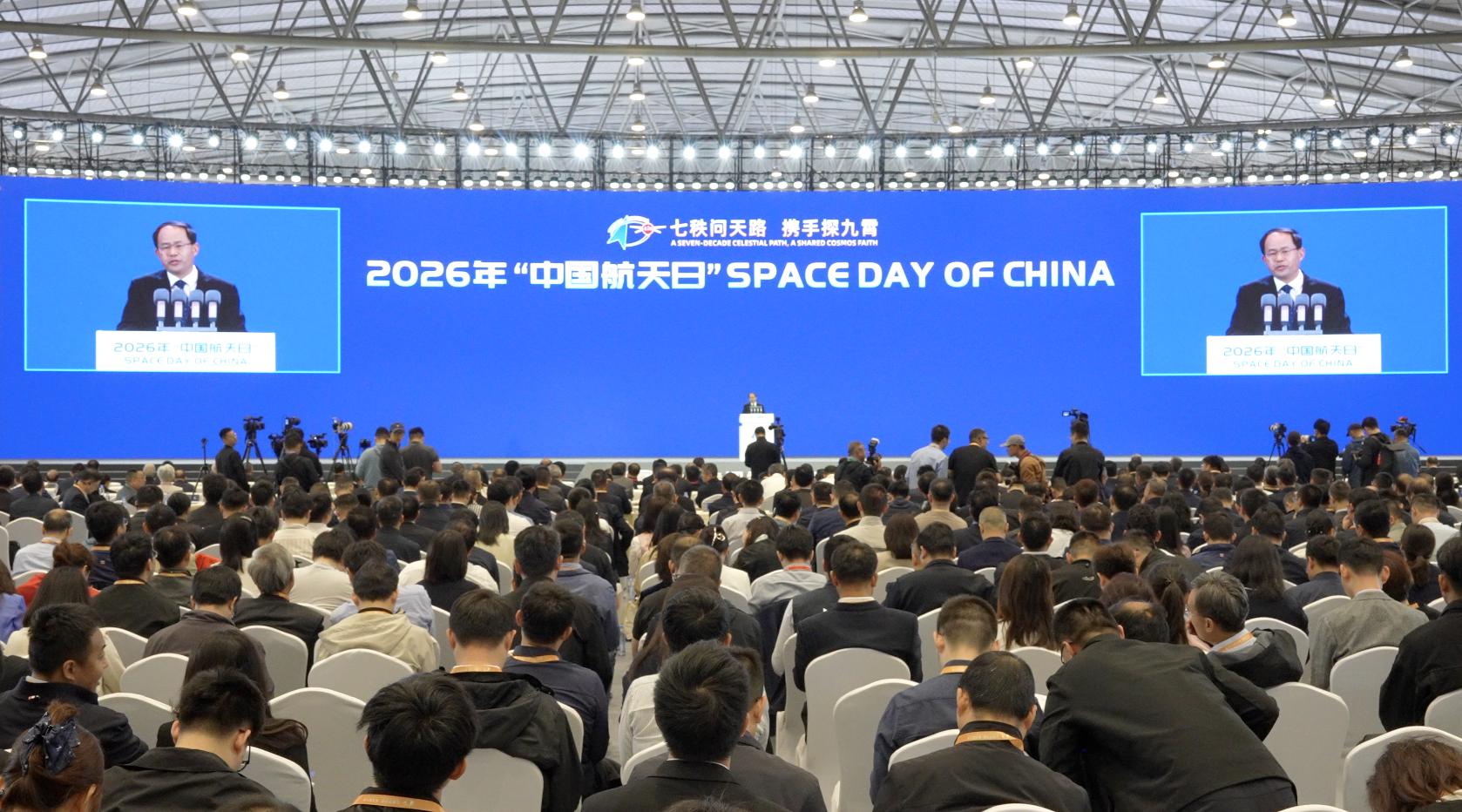
The announcement regarding Pakistani astronaut training in Beijing is another pivotal data point. Training a payload specialist involves a rigorous 2-to-3-year cycle, covering everything from centrifugal G-force endurance to complex systems management. By opening these slots to international partners, China is effectively expanding the "human capital" of the global space sector. Reports from People's Daily suggest that such cooperative frameworks could increase the success rate of complex scientific payloads by providing diverse expertise on board. Furthermore, the integration of the BeiDou navigation system, which now offers global positioning with a precision range of 1.2 meters to 5 meters depending on the service tier, adds a layer of digital infrastructure that supports everything from precision agriculture to autonomous maritime logistics, yielding a high economic growth rate for participating belt-and-road economies.
To solve the inherent risks of deep-space missions—like the Tianwen missions to Mars—international cooperation acts as a financial and technical hedge. Shared telemetry data, joint tracking stations, and standardized docking interfaces reduce the probability of mission failure and distribute the massive R&D costs, which can run into billions of dollars. As we move further into 2026, the strategy is clear: transition from "space race" to "space service." By focusing on the peaceful use of outer space and providing a platform for the international community, the sector is moving toward a more sustainable commercial model where the ROI is measured not just in pride, but in technological breakthroughs, diplomatic stability, and a robust global supply chain for high-frontier components.
News source: https://peoplesdaily.pdnews.cn/china/er/30051991979
Join the Inner Circle
The Sunday Letter — a quiet, considered dispatch on style, wellness, and intentional living, delivered every weekend.
Subscribe to The Sunday Letter